We have watched women seize.
We have watched them bleed.
We have delivered babies into silence.
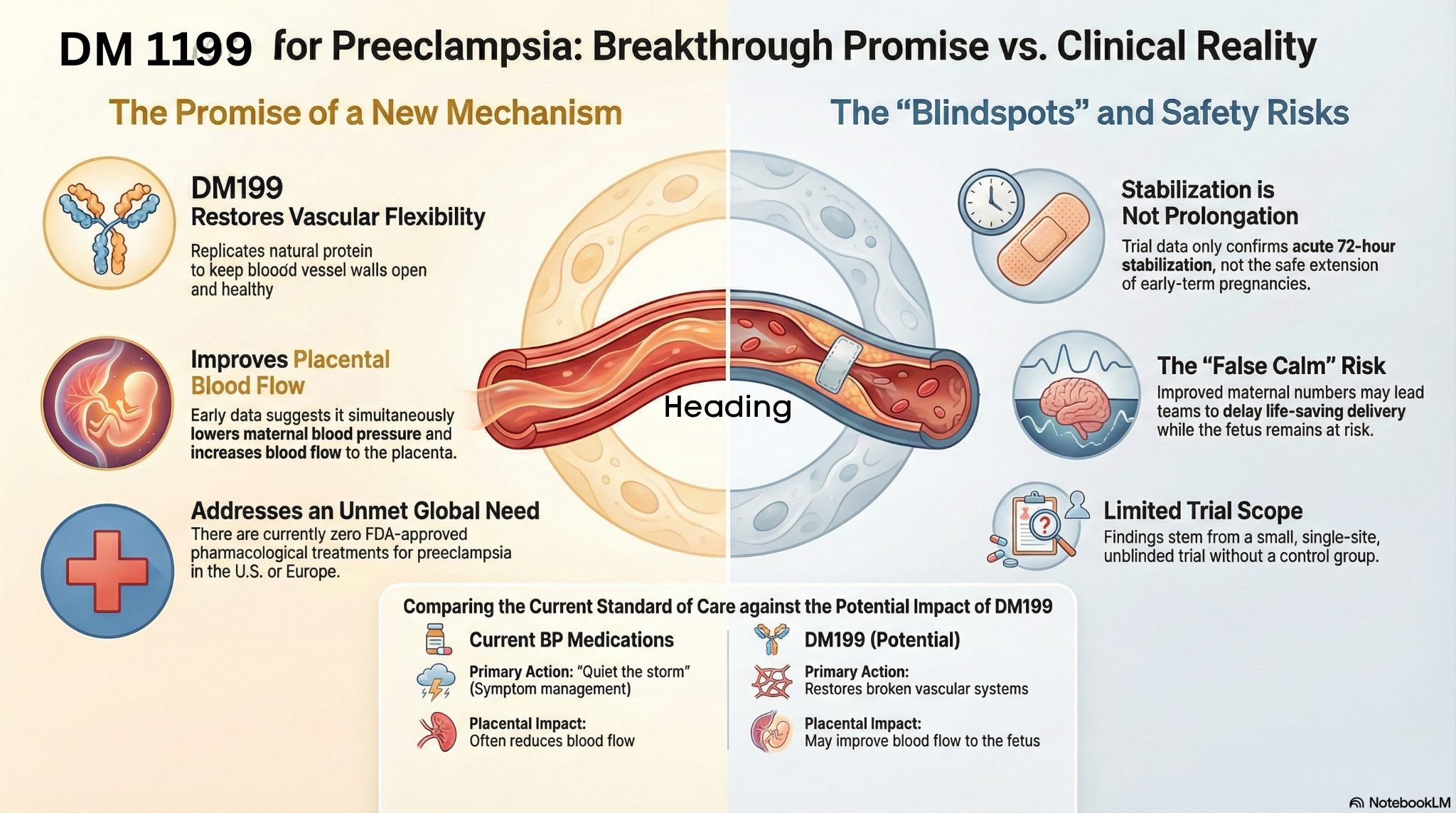
And we have done it all with blood pressure medications that quiet the storm but cannot stop what is driving it.
That may be about to change.
Maybe.
DM199 is a lab-engineered copy of a protein your body makes naturally, one that helps keep blood vessel walls flexible, healthy, and open. In preeclampsia, that system breaks down. This drug is designed to restore it.
Early data from a Phase 2 trial in South Africa, covered this week by @Ari Daniel at NPR, suggest it may lower maternal blood pressure while simultaneously improving blood flow to the placenta. That combination, if it holds, would be genuinely significant. There are currently no FDA-approved pharmacological treatments for preeclampsia in the U.S. or Europe, a reality the @Preeclampsia Foundation has long fought to change.
So is this hype or a real promise?
Honestly, it is both, and that distinction matters enormously for patient safety.
The trial conducted by @DiaMedica Therapeutics is small, single-site, and unblinded. The women who showed the most dramatic response were already scheduled for delivery within 72 hours. That is acute stabilization, not disease management. Important, but not the same as safely prolonging a pregnancy in a 26-week patient with a failing placenta. Maternal fetal medicine specialists like Dr. Kara Rood at Ohio State and Dr. Cornelia Graves at Tennessee Maternal Fetal Medicine are asking the right questions about what comes next.
The question that keeps me up at night: if a drug makes the maternal picture look calmer, does the clinical team unconsciously hold back on delivery while the fetus is quietly running out of time? That answer is not in the data yet.
The science is promising enough to watch closely. The trial design is too early to trust completely.
In maternal health, optimism without scrutiny costs lives.
Check out my Substack article for a deeper dive into this story. https://pregnancyblindspots.substack.com/p/a-new-drug-for-preeclampsia-is-making