
Preeclampsia Starts Earlier Than You Think. Here Is What That Means.
Every May, Preeclampsia Awareness Month brings the same conversation.
Know the symptoms. Watch your blood pressure. Call your doctor if something feels wrong.
That conversation is not wrong. But it is incomplete. And the part that is missing may be the most important part of all.
This month at Perinatal Solutions, I want to go deeper than symptoms. I want to talk about where preeclampsia actually begins.
The Disease Starts Before Anyone Is Looking
Most people, including many clinicians, understand preeclampsia as a blood pressure problem that develops in the third trimester. That understanding is not inaccurate. But it describes the end of a process that began much earlier.
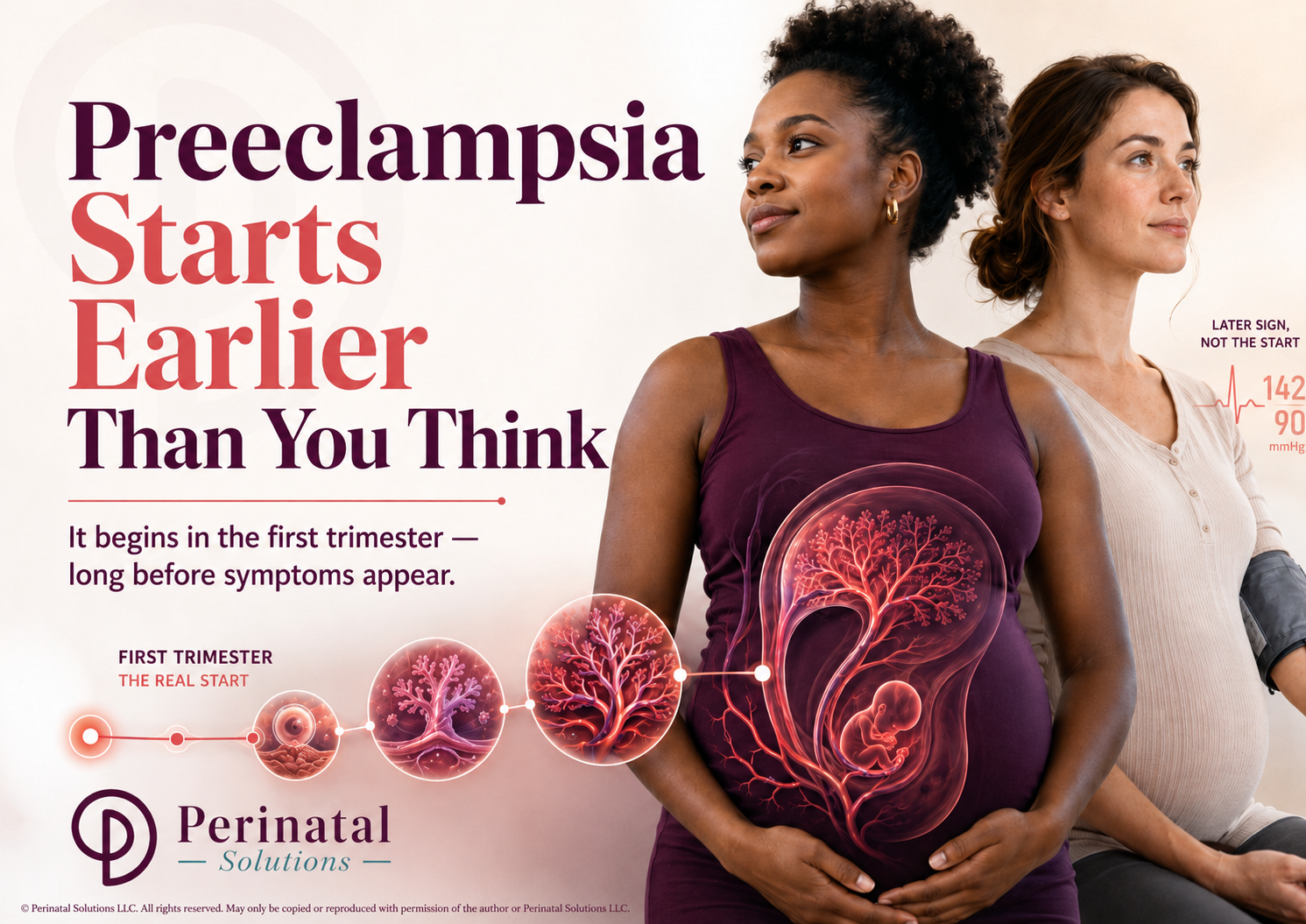
Research has established for decades that preeclampsia is a two-stage disease.
Stage One occurs in the first trimester, silently, with no symptoms or warning signs. During this stage, specialized placental cells are supposed to invade the uterine wall and transform narrow blood vessels into wide, high-flow channels capable of supplying a growing baby with everything it needs. When that transformation is incomplete, the placenta does not receive adequate blood and oxygen. It begins to struggle. And it begins sending distress signals into the mother’s bloodstream.
Stage Two is what most people recognize as preeclampsia. Rising blood pressure. Protein in the urine. Headaches and vision changes. Organ involvement. But by the time these signs appear, the underlying process has often been underway for weeks or months.
The blood pressure rise is not the disease. It is the body’s emergency response to a disease that started in the first trimester.
Why This Distinction Matters Clinically
Understanding preeclampsia as a placental disease rather than a hypertensive disorder changes the clinical picture in meaningful ways.
It shifts the relevant window from the third trimester to the first. It explains why low-dose aspirin, started early enough in pregnancy, can reduce the risk of preeclampsia in high-risk patients. It explains why some women develop severe disease quickly while others progress more slowly. It explains why the damage does not always stop at delivery.
It also raises a question that every clinician and health system should be asking. If the disease begins in the first trimester, why are our monitoring systems, our alert thresholds, and our clinical protocols still primarily designed around third-trimester presentations?
That gap between what the science supports and how care is delivered is a Pregnancy Blindspot. It is one of the most consequential gaps I have identified across thirty years of clinical practice and federal case review work.
What Every Patient Deserves to Know
Regardless of where care systems are in closing these gaps, every pregnant woman deserves access to this information now.
Know your baseline blood pressure before you conceive if at all possible. The placenta begins forming in the first trimester. Your provider needs to know what is normal for you from the very start.
Ask about low-dose aspirin at your first prenatal visit if you have any risk factors. The timing of when aspirin is started matters. Do not wait for someone to bring it up.
Do not treat delivery as the finish line. The distress signals released by a struggling placenta do not always resolve immediately after birth. Postpartum preeclampsia is real, it is underrecognized, and it can be life-threatening. Know the signs and monitor your blood pressure for weeks after you go home.
What Is Coming
I have spent thirty years watching the gap between what science knows about preeclampsia and what women are actually told. That gap is the reason I built the Pregnancy Blindspots framework. And it is the reason I am currently writing a patient education resource that will do what most pregnancy books have never done: explain the biological origins of preeclampsia in plain English, starting where the disease actually starts, long before any symptom appears.
Every woman who has ever been told she had a blood pressure problem during pregnancy deserves to understand what was actually happening in her body.
More on that soon.
Stay Connected
If you are a pregnant woman or planning to become pregnant, subscribe to the Pregnancy Blindspots Substack for ongoing clinical updates and early warning education: pregnancyblindspots.substack.com
If you are a clinician, hospital leader, or health system decision-maker, the conversation about where these blindspots live in your workflows is exactly what Perinatal Solutions was built for. Reach out directly at DrLinda@perinatalsolutions.com